Getting involved: How school councils strengthen our school communities
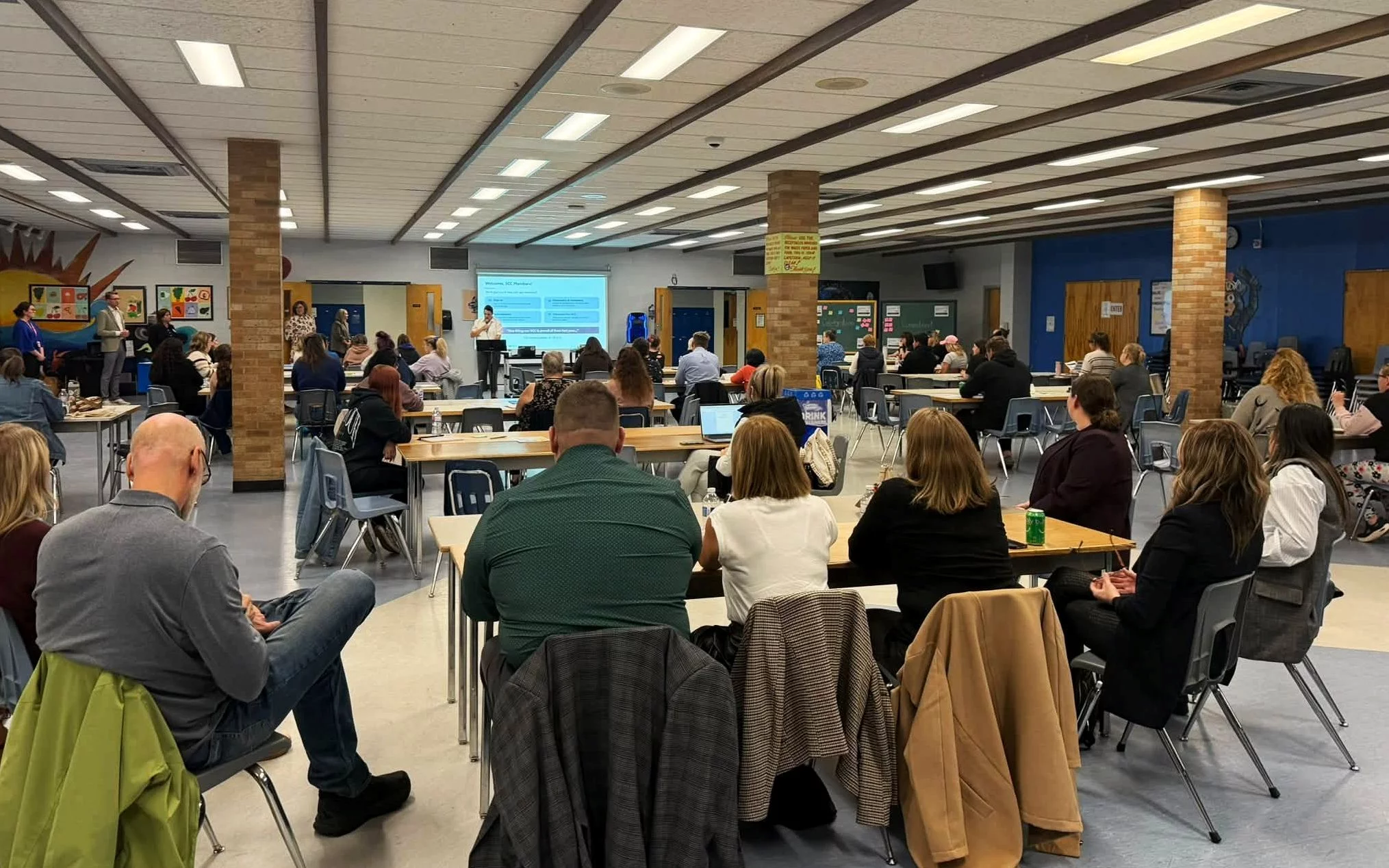
Parent and guardian representatives from across Saskatoon Public Schools came together at Walter Murray Collegiate on October 21 for the first School Community Council (SCC) Assembly of the school year. It was an opportunity to connect, share ideas and learn more about the work happening across the division—all with the goal of supporting student learning and well-being.
The SCC Assembly brings together up to two representatives from each of the division's 58 schools three times a year. These gatherings provide an opportunity for council members to hear directly from division leadership, learn about educational priorities and programs, and exchange ideas with representatives from other schools.
The October 21 agenda included updates from the Director of Education and Board of Education Chair, information about nutrition and food programming in schools (The Good Lab), and presentations on K–3 assessment and the new K–8 report card. There were also opportunities for networking, celebrating SCC accomplishments, and sharing ideas that could be brought back to individual school communities.
While the assembly connects councils from across the division, much of the important work happens within individual schools throughout the year.
Two ways to get involved
Parents and guardians looking to play a more active role in their child's school have two opportunities: the School Community Council and the Parent Council.
Although their responsibilities differ, both play an important role in strengthening school communities.
- School Community Councils focus on supporting student learning and well-being. Members learn about the needs of students and their school community, consider available resources, and provide advice to school leadership on how best to support students. Each SCC receives approximately $2,000 annually to support its work. Council members determine how those funds are used, whether that's providing resources to help families support learning at home, bringing in Elders or guest presenters, or organizing events that build connections within the school community.
- Parent Councils focus primarily on fundraising. They organize fundraising initiatives and decide how the money raised will be spent, often supporting additional opportunities, activities or resources that might not otherwise be possible.
Parents and guardians are welcome to participate in either council or both.
What's in it for parents?
While schools benefit from the time, ideas and energy that council members contribute, parents and guardians have much to gain from participating, too.
Kat Lysak, Chair of the School Community Council at Wildwood School, says being involved helps her stay informed about what's happening at the school and discover ways to better support her children's learning.
Council participation also creates opportunities to hear from guest speakers on topics ranging from curriculum to student well-being, connect with school staff and other families, and learn from the experiences of other school communities.
For many parents, it's also a chance to build relationships and feel a stronger sense of belonging within their child's school.
And new faces are always welcome. Whether someone has years of experience serving on a council or is attending for the first time, there is an opportunity to contribute.
How to get involved
Getting started is simple.
Schools hold an Annual General Meeting at the beginning of each school year, with invitations shared through Edsby or other school communication channels. All parents and guardians are welcome to attend.
Those who missed the meeting can still get involved. Simply contact your school principal to express your interest and ask to be notified about upcoming meetings.
School councils offer families meaningful ways to contribute to their school communities while gaining information, connections, and a greater understanding of their children's education.
The time commitment can be modest, but the benefits – for students, families, and schools – can be lasting.